

January 29, 2026 | Car Accidents
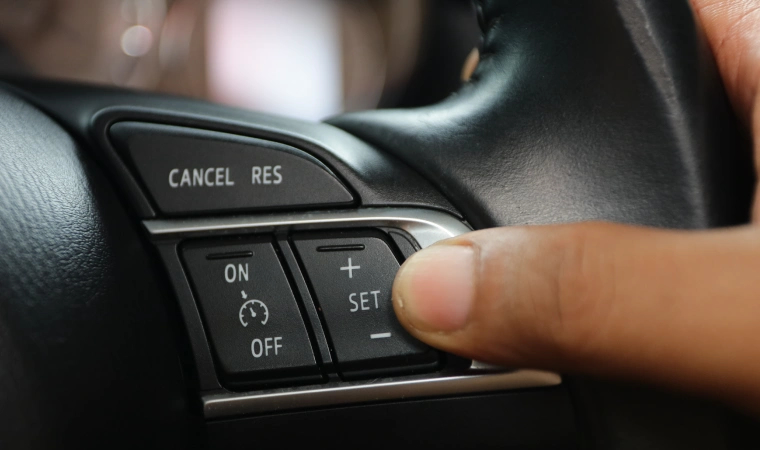
Cars are improving every year. One feature many Arizona drivers now see on window stickers is adaptive cruise control (ACC). If you’ve never used it — or you’ve relied on it and later wondered whether it didn’t react the way you expected — you’re not alone. Knowing what ACC does can help you make safer choices on the roads in Phoenix, Arizona.
What Is Adaptive Cruise Control?
Adaptive cruise control is an advanced driver-assistance feature that builds on traditional cruise control. Instead of simply holding a set speed, ACC uses sensors, radar, cameras, or a combination of these tools to detect vehicles ahead.
When traffic slows, the system can automatically reduce your speed to maintain a preset following distance. When the road clears, it may accelerate back to your chosen speed without you touching the pedals.
Many ACC systems can:
- Slow down or brake when traffic ahead slows
- Resume speed when traffic starts moving again
- Let drivers adjust the following distance
- Work at highway speeds or, in some vehicles, in stop-and-go traffic
ACC can make long drives feel easier, but it’s important to remember it’s still an assist feature — not a substitute for driving.
Is Adaptive Cruise Control Safe?
Adaptive cruise control can improve safety in certain scenarios, but it also has real limits. The biggest safety issue usually isn’t the feature itself — it’s when drivers expect it to handle more than it was designed to do.
Potential Safety Benefits
When used the right way, adaptive cruise control may help drivers:
- Maintain steadier following distances
- Reduce fatigue on long highway trips
- Avoid rear-end collisions that occur due to gradually increasing speed and delayed braking
These benefits tend to show up most during predictable freeway driving.
Limitations Drivers Should Be Aware Of
ACC isn’t built to handle every road hazard. Common limitations include:
- Trouble detecting stopped vehicles at higher speeds
- Reduced performance in heavy rain, glare, or blowing dust
- Difficulty recognizing motorcycles, pedestrians, or sudden lane changes
- Drivers becoming less attentive because the car seems to be in control
Arizona drivers also deal with fast-moving traffic, sudden backups, work zones, and dust storms. Any of these can create conditions where ACC may not respond the way a human driver would.
Common Misunderstandings About ACC
Many people hear “adaptive” and assume the car will manage emergencies. That’s not how these systems work.
Adaptive cruise control:
- Does not replace an attentive driver
- Does not make a vehicle self-driving
- Does not eliminate the need to brake or steer
Even when ACC is on, drivers are still responsible for staying alert and controlling the vehicle.
Can Adaptive Cruise Control Contribute to Accidents in Arizona?
Yes. ACC is meant to assist, but it can contribute to crashes when a driver relies on it too heavily, or the system doesn’t detect a hazard quickly enough.
Examples include:
- A vehicle ahead stops suddenly and the system doesn’t brake in time
- Another driver cuts in too closely, causing the system to react late or inconsistently
- Sensors are blocked by dust, dirt, or damage, limiting what the system can see
After a crash involving driver-assistance tech, fault can get complicated. Sometimes, it’s a straightforward driver-error case. Other times, investigators may need to examine how the feature was used, whether it was functioning properly, and whether other factors played a role.
What Arizona Drivers Can Do to Stay Safe
If your vehicle has adaptive cruise control, a few practical habits can make it safer and less stressful to use.
Before you rely on ACC:
- Stay alert and keep your hands on the wheel.
- Avoid using ACC in dust storms, heavy rain, or areas with lots of lane shifts.
- Review your owner’s manual so you understand your system’s limits.
- Keep the sensor area clean and clear.
- Be ready to brake at any moment.
ACC can be helpful on the highway, but it’s still you who has to make the big decisions.
Contact KRLG Injury Lawyers for a Free Consultation With a Phoenix Car Accident Lawyer
If you were injured in a car accident involving adaptive cruise control or another advanced vehicle feature, you may have questions about what happened and what to do next. These cases can involve more moving pieces than people expect. Contact KRLG Injury Lawyers for a free consultation with a Phoenix car accident lawyer.
For more information, please contact the personal injury attorneys at KRLG Injury Lawyers at our nearest location to schedule a free consultation today.
We serve Scottsdale, Phoenix, Maricopa County, & Arizona’s surrounding areas.
KRLG Injury Lawyers
7702 E Doubletree Ranch Rd #150, Scottsdale, AZ 85258
(623) 303-5754