

February 18, 2026 | Personal Injury
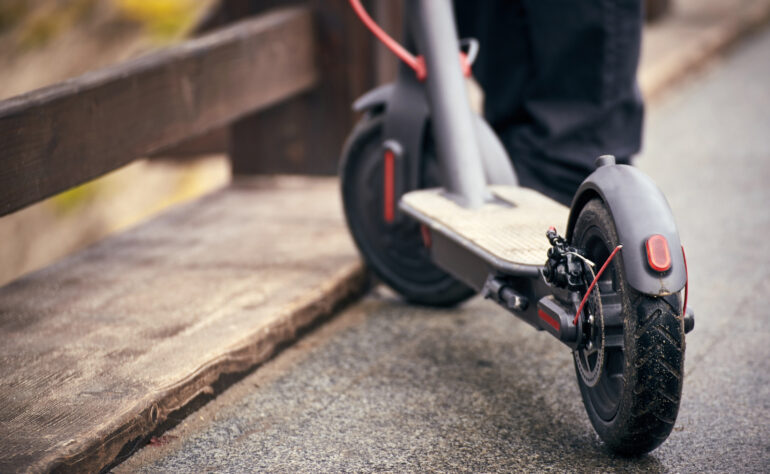
Scooters and mopeds are increasingly common on Phoenix roads, bike lanes, and neighborhood streets. Although people often use the terms interchangeably, scooters and mopeds are treated differently under Arizona law. Those differences can affect where the vehicle may be ridden, what rules apply to the rider, and how an accident claim is evaluated after a crash.
Understanding how Arizona distinguishes between scooters and mopeds can help riders make informed choices and avoid unexpected legal or insurance issues if a personal injury occurs.
What Is a Scooter?
A scooter is generally a two-wheeled vehicle with a step-through frame and a flat area where the rider places their feet. Scooters may be powered by electricity, gasoline, or, in limited cases, manual propulsion. In Phoenix, electric scooters are especially popular for short trips in urban areas.
Most scooters are designed for lower speeds and shorter distances. They often have smaller wheels, automatic operation, and less overall power than motorcycles, making them better suited for city streets rather than high-speed traffic.
What Is a Moped?
A moped is a small motor-driven vehicle that blends characteristics of a bicycle and a motorcycle. Traditional mopeds included pedals along with a small engine, though many modern versions rely entirely on motor power. Mopeds are typically built with a sturdier frame and slightly larger wheels than scooters.
In Arizona, mopeds are commonly defined by limits on engine size and top speed. These legal definitions separate mopeds from motorcycles and higher-powered motor scooters.
Key Differences Between Scooters and Mopeds
While scooters and mopeds may appear similar at a glance, they differ in ways that can carry legal and practical consequences.
Some important distinctions include:
- Power and speed limits: Mopeds are usually restricted to lower engine capacity and speed, while scooters may range from low-speed electric models to faster gas-powered versions.
- Overall design: Scooters typically have a flat footboard and enclosed body panels, whereas mopeds often resemble lightweight motorcycles or bicycles.
- Legal treatment: Arizona regulations may impose different licensing, registration, and equipment requirements depending on whether the vehicle is classified as a scooter or a moped.
These differences influence where the vehicle may be operated and what responsibilities the rider has under state law.
How Arizona Law Regulates Scooters and Mopeds
Arizona law does not apply a single set of rules to all small motorized vehicles. Some scooters may fall outside traditional motor vehicle registration requirements, while mopeds are more likely to require registration and compliance with specific equipment standards.
Rules involving helmet use, roadway access, and licensing can depend on the rider’s age and the vehicle’s classification. Certain roads with higher speed limits may be off-limits to some scooters and mopeds, even if they are legal elsewhere.
Because these distinctions are not always obvious, disputes sometimes arise after collisions about whether a rider was operating the vehicle legally at the time of the crash.
Why the Difference Matters After an Accident
When a scooter or moped accident happens in Phoenix, the type of vehicle involved can influence how an injury claim unfolds. Insurance companies often examine whether the vehicle met legal requirements and whether the rider was permitted to operate it on that roadway.
The classification of the vehicle may affect:
- Which insurance policies apply
- Whether licensing or registration was required
- Whether the rider was allowed to be on a particular street
- How fault and liability are assessed
Even collisions at relatively low speeds can result in serious injuries due to the lack of physical protection for riders.
Common Causes of Scooter and Moped Accidents in Phoenix
Many scooter and moped accidents are caused by the same hazards that affect bicyclists and motorcyclists. Busy intersections, heavy traffic, and driver inattention all increase the risk of a crash.
Frequent causes include:
- Drivers failing to yield or misjudging distance
- Sudden lane changes or turns
- Distracted or impaired driving
- Poor road conditions or debris
- Limited visibility, especially at night
Because scooters and mopeds are smaller and less visible than passenger vehicles, riders are especially vulnerable when drivers fail to watch for them.
Contact the Phoenix Personal Injury Lawyers at KRLG Injury Lawyers for Help Today
A collision involving a scooter or moped can raise complex legal questions about fault, insurance coverage, and compliance with Arizona law. Having clear guidance can make a significant difference in how smoothly the claims process moves forward.
KRLG Injury Lawyers represents injured riders and other accident victims throughout Phoenix and the surrounding communities. If you have questions about your rights or next steps after a scooter or moped accident, contact our Phoenix personal injury attorneys for a free consultation.
We serve Scottsdale, Phoenix, Maricopa County, & Arizona’s surrounding areas.
KRLG Injury Lawyers
7702 E Doubletree Ranch Rd #150, Scottsdale, AZ 85258
(623) 303-5754